
Mathematics is a strange type of artifice. By virtue of being abstract, mathematical notions and operations exhibit extreme conceptual mobility, as they travel across numerous fields of inquiry addressing diverse scales of reality, from the hyper-local to the hyper-global. Mathematics used to be performed solely with pen and paper, but today, it has become increasingly automated to the extent that its expression tends to be conflated with the prowess of computation. Numerous contemporary examples show how the emergence of novel mathematical theories such as recursion theory, graph theory, type theory, and neural network theory has coincided with the advent of particular technological artefacts, including computers, their networks, programming languages, and machine learning. While these artefacts often tend to serve as both the figurative expressions and performative sites where mathematics becomes artificially ‘real’ and ‘concrete’ in our cultural landscapes, it would be one-sided to reduce the plurality of mathematics and their practices to such instances.
Our research group engages with this artificiality of mathematics from a media theoretical and cultural analysis angle. We believe that mathematics has become a type of ‘medium’ that asks to be studied as such. We understand mathematics as being both a medium and a situated cultural practice: a type of doing that is interwoven across multiple fields—from the sciences to the arts—each having its own epistemic and aesthetic concerns and ways of reasoning with and through mathematics. Our aim is to stimulate interdisciplinary dialogues between these fields in order to forge a critical and nuanced understanding of what mathematics is, what it does, and where it operates. Our activities are multiple: we host a reading group, we report on research-in-progress, we organise seminars and events, and we produce experimental artefacts staging encounters with acts of mathematics.
For further information and inquiries, you can contact: David Gauthier
Research Activities
-
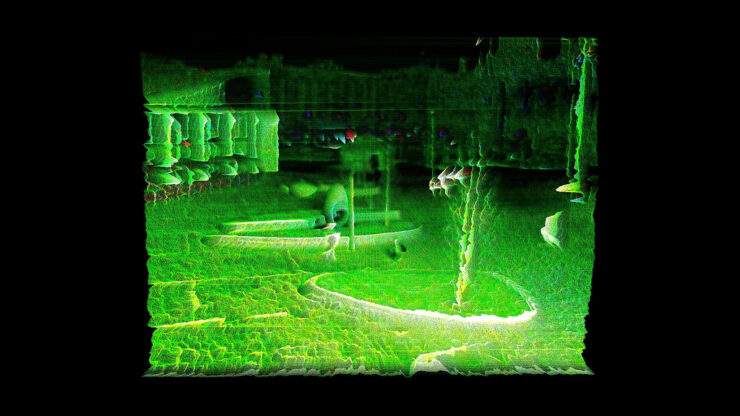
Cultures of Computation — NICA Graduate Seminar
This graduate seminar investigates the challenges that contemporary computation poses to cultural analysis. Our starting premise is that computation is… > read more
-
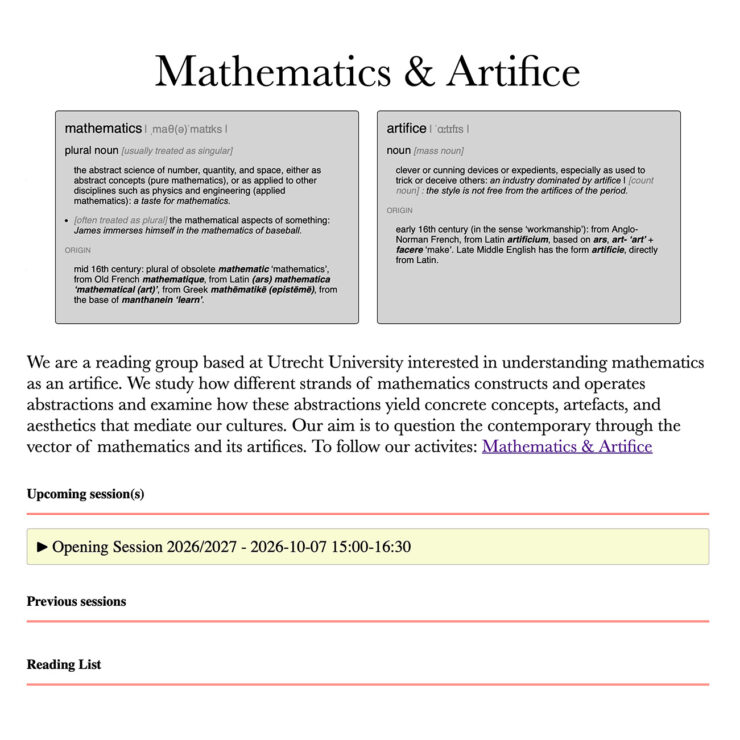
Reading Group: Mathematics & Artifice
Our reading group meets throughout the academic year to discuss texts at the intersection of mathematics and its cultural and… > read more
-
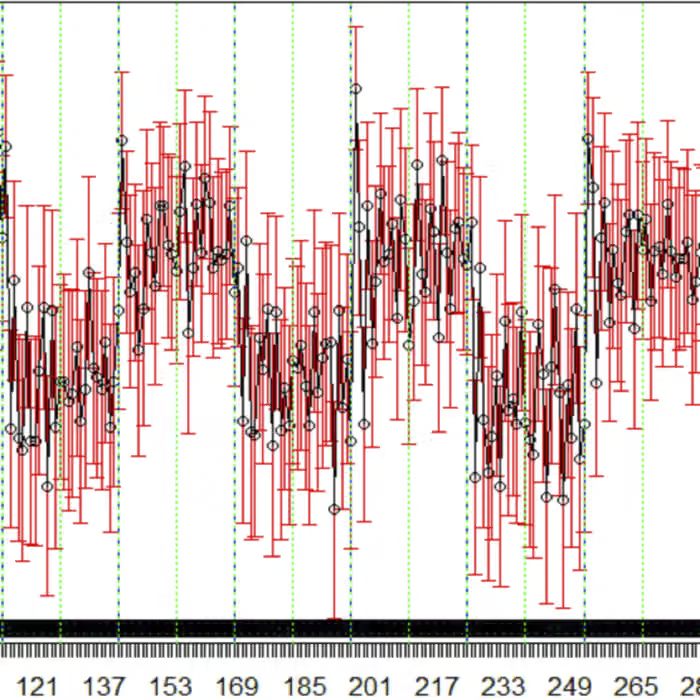
Situated Bayes—The Cancelling Out of Chance
The open access journal Computational Culture features a special issue on mathematical probability entitled Situated Bayes – Feminist and Pluriversal… > read more
-
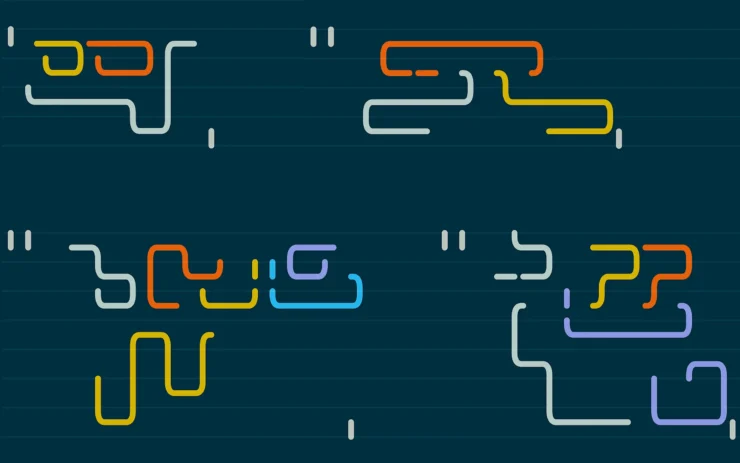
Book Launch—Forty-Four Esolangs: The Art of Esoteric Code with Daniel Temkin
In his new book, Forty-Four Esolangs (MIT Press), Daniel Temkin challenges conventional definitions of language, code, and computer, showing the… > read more
-
“Collaboration and Dissensus in the Experimental Arts and Innovation Policy” – Michael Century (Rensselaer Polytechnic Institute)
Michael Century’s recently published book, Northern Sparks, offers an account of the intersecting histories of technological innovation, new media arts,… > read more