

“Inside the Model: Thinking Knowledge through the Orrery” – Jilke van der Kolk
How can a tiny model of the solar system reveal the responsibility involved in knowing? This question stayed with me after the Transmission in Motion seminar on Theatre, Moon Studies, and Interplanetary Entanglements. Planetary knowledge is often imagined as distant, even though it is always grounded in specific materials and forms of mediation. Charles LeDray’s
“A Messy Race to Ou(te)r Space” – Thorn Austin
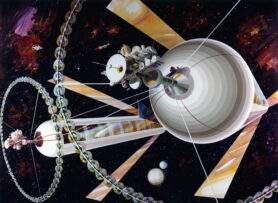
When we hear the word extraterrestrial, we often think of aliens, visitors from another planet, another galaxy, another world. But as humans explore deeper into the vastness of space the question arises, are we not, to some extent, also extraterrestrial? Thinking about ourselves as extraterrestrial beings dissolves the false separation between Earth and outer space
Book Launch—Forty-Four Esolangs: The Art of Esoteric Code with Daniel Temkin
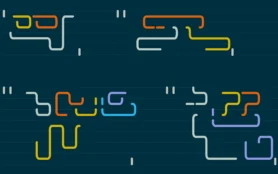
In his new book, Forty-Four Esolangs (MIT Press), Daniel Temkin challenges conventional definitions of language, code, and computer, showing the potential of esolangs—or esoteric programming languages—as pure idea art. The languages in this volume ask programmers to write code in the form of prayer to the Greek gods, or as a pattern of empty folders,

“Object Orientation: Initiating Interdisciplinary Conversation from an Object” – Jenny Chan
In the workshop “Frogs and Clowns: An Object Orientation of Protest Today”, Anneke Jansen (Theatre Programming, SPOT Groningen) and Iris van der Tuin (Utrecht University) introduced ‘object orientation’ as a collaborative method that initiates interdisciplinary conversations. By using an object as a starting point, researchers collectively reflect on what kinds of perspectives arise from their

The Event of Redness – Nikita Chistov
What is a clown nose? Is it a nose or, rather, something that conceals your nose? Does this concealment make you a clown? My second coffee of the day has just kicked in, and I am ready to “unpack” the small spongy sphere in front of me. Soon enough, I am reminded of Dumit’s
“Analysing Silliness” – Thorn Austin
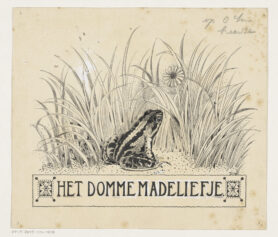
What do you think of when I mention a frog? A slimy green creature? A silly-looking jumping creature? A cute little dude on a leaf? Unless frogs are particularly scary to you, the idea of someone in an inflatable frog costume would probably be a mood-lifting sight, a welcome bit of silliness added to your
[TiM Recap] “Frogs and Clowns: An Object Orientation of Protest Today” — Anneke Jansen (SPOT Groningen) and Iris van der Tuin (Utrecht University)
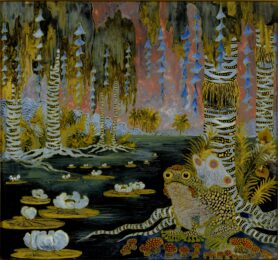
by Ani Encheva “The multiple dimensions that make up objects also make up ourselves, as well as our categories. Telling the stories of an object therefore begins unpacking our own clichés, our certainties, our affects.” – Joseph Dumit (2014, 349) In encountering the inflatable frogs and clowning artefacts that populate contemporary protest, we are invited
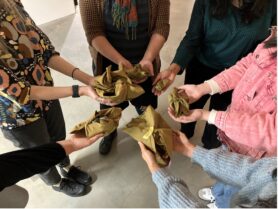
Recommended event “Affective Cartographies: Sensing and Mapping Climate Emotions”
On November 25th, Dr. Tamara Borovica (RMIT University) will lead the workshop “Affective Cartographies: Sensing and Mapping Climate Emotions”, hosted by the Futures + Literacies + Methods Lab. Dr. Tamara Borovica has designed Affective Cartographies as a practice-led workshop that explores how we can think, feel, and know through the body. Using body mapping as
“Culture for Democracy, Democracy for Culture”- Lars Ebert (Culture Action Europe)
In an era of profound social, economic, and environmental challenges, cultural leadership through cultural democracy offers a critical pathway toward building resilient, inclusive societies. The transformative role of socially engaged arts fosters democratic agency, bridging ideological divides, and amplifying marginalized voices. The democratization of culture requires rethinking the frameworks that define cultural value, encouraging active
“On Institutionalizing Differently” – Anne Breure (Artistic Director Theater Utrecht) in dialogue with Liesbeth Groot Nibbelink (Utrecht University) and Maaike Bleeker (Utrecht University)
Operating at the intersection of creative practice, cultural management, and politics, Anne Breure has many years of experience in navigating institutional entanglements. A critical thinker, passionate speaker, and decisive cultural leader, she has questioned and challenged conventional structures within the arts sector and initiated new cultural policies. As an enthusiastic speaker, she is a much